The coincidence that was not really a coincidence
When Lisa Hicks asked Deborah Meaden about her first impression of SNOAP in the Den, Deborah did not talk about the product first. She talked about what she had been doing immediately before she walked through the door.
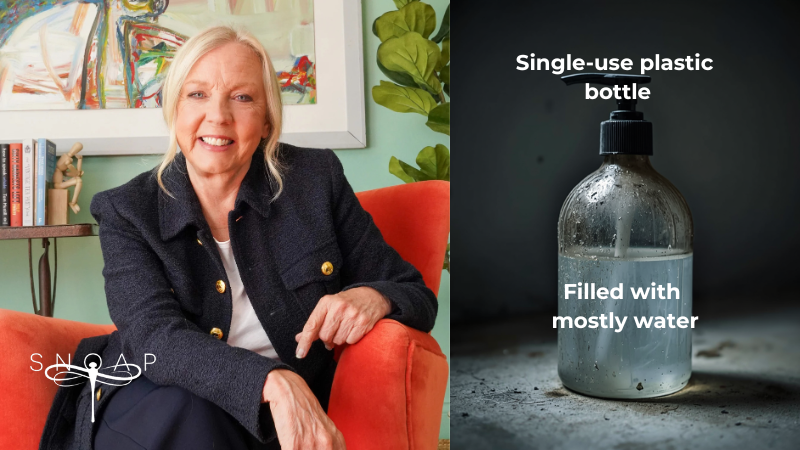
I've just done a campaign about liquid soap — basically saying we really shouldn't be carting, because liquid soap is full of water. So we really shouldn't be carting a load of water around the countryside. There's a big environmental impact. You came in with SNOAP and it was like — wow. Okay. Is this it? Is this the solution?
That is not an investor discovering an interesting product. That is a campaigner finding the answer to a question she had already been publicly asking.
Deborah Meaden had been arguing that the liquid soap industry was fundamentally wasteful — that carting water in single-use plastic bottles around the country made no environmental or economic sense. Then a Welsh founder walked into the Den with a dispenser that eliminated that water entirely. Solid soap bars, ground to powder, activated only when water is added. No water to transport. No single-use plastic. No waste.
The SNOAP Refillable Soap Dispenser System was not what Deborah had been told to look for. It was what she had been looking for.
What Is Refillable Washing?
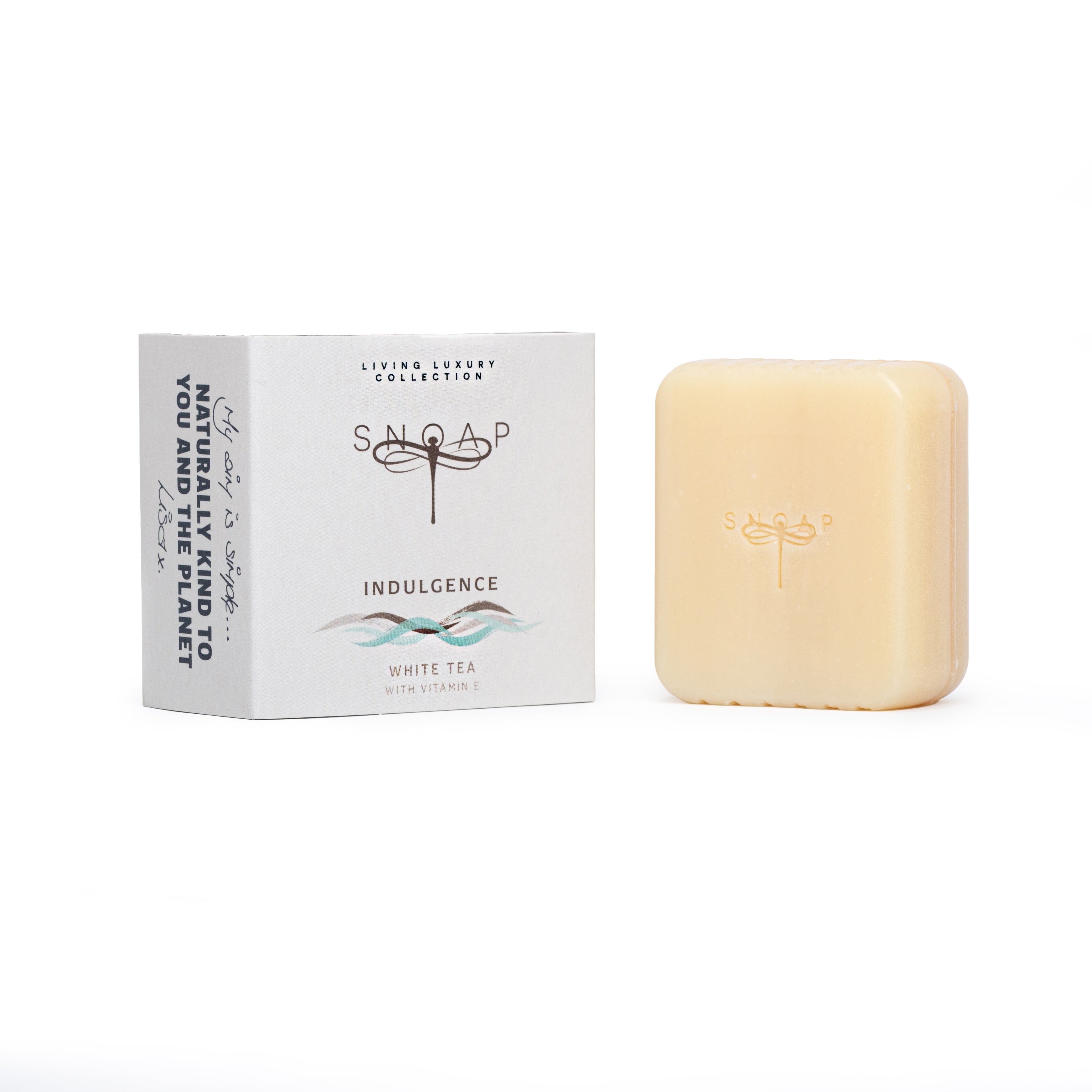
Refillable washing replaces single-use plastic bottles of liquid soap with a permanent dispenser and concentrated solid soap (or shampoo) bars. The SNOAP system uses a twist mechanism to grind solid bars into a fine powder that lathers instantly when water is added — delivering all the cleansing effectiveness of liquid soap with none of the synthetic detergents, none of the unnecessary water content, and none of the single-use plastic waste. Each refill bar replaces up to 10 single-use plastic bottles of hand wash, body wash, or shampoo - the dispenser holds two. The dispenser is designed to last approximately 25 years.

Why Liquid Soap Is Mainly Water — and Why That Matters
The water transport argument at the heart of Deborah's campaign is straightforward but almost never discussed. Most liquid hand wash, body wash, and shower gel products are between 60 and 90 percent water. That water is manufactured into the product, packaged in a single-use plastic bottle, shipped across the country or imported from overseas, and eventually poured down the drain.
The carbon footprint of transporting water in single-use plastic at scale is significant and almost entirely hidden from the consumer. The price you pay for a bottle of liquid hand wash includes the cost of that water, that transport, and that plastic — none of which provides any cleaning benefit whatsoever.
There is a further problem. As Lisa explained to Deborah during their conversation at Tops Day Nurseries: 60 percent of the liquid you put on your skin goes down the drain unactivated — before it has cleaned anything at all. Because liquid soap slides off wet hands immediately, the large soap companies add foaming agents so that the remaining 40 percent creates bubbles quickly — giving the illusion of a thorough wash.
I think I want bubbles. That's what I think I want.
That is Deborah's response. And it is the most honest description of how the liquid soap industry works. The bubbles are not evidence of cleaning. They are a signal engineered to make you feel like you have washed when most of the product has already gone.
SNOAP works differently. The powder only activates when water is added to your hands. You create the lather through friction — which simultaneously exfoliates dead skin cells and works the soap into the lines and cracks on your hands, delivering what Lisa describes as a clinically better wash. Nothing goes down the drain before it has done its job.
The Behaviour Change — Smaller Than Anyone Expects
One of the most common reasons people hesitate before switching from liquid soap to SNOAP is the assumption that it must be complicated. A dispenser to install. A new mechanism to learn. A habit to change.
Deborah Meaden tested this herself. After investing, she installed a SNOAP dispenser at home — as due diligence, to confirm that what she had been told in the Den was true in daily use. She described what she found:
It's tiny. It's a tiny behavioural change. You know — it's literally, instead of going like that, you turn the top. That's it. Obviously you have to install it, but that took nothing.
The installation takes minutes. The behaviour change is a single wrist movement — turning the top of the dispenser rather than pressing a pump. That is the entire adjustment required, in exchange for eliminating single-use plastic from your handwashing routine permanently, saving approximately £100 per year, and switching from a synthetic detergent that strips your skin to real soap that protects it.
The Lather Surprise — She Expected Compromise. She Found the Opposite.

This is the moment that matters most for anyone who has never tried solid soap and assumes it must be a lesser product.
Deborah Meaden is a professional sceptic. Her due diligence is rigorous. She had already used SNOAP at home for an extended period before she discussed it publicly. When she described her experience, she did not lead with enthusiasm. She led with what she had expected to have to accept:
I wasn't expecting the lather. I thought there'd be some kind of compromise — but it lathers, you know. And even the shampoo bar — and I've tried a lot of shampoo bars — somehow I want it to feel soft and lathery. And it lathers. So the actual feel — once you've got the product there is absolutely no compromise whatsoever. I think it feels slightly nicer.
She expected to make a sacrifice for sustainability. She did not. She found a product that is better than what it replaces — not despite being sustainable but because of what it is made from.
The reason SNOAP lathers the way it does, and leaves skin feeling the way it does, comes down to the chemistry of saponification. As Lisa explained to Deborah: SNOAP bars contain two elements that emerge from the saponification process — the stripping element that envelops bacteria and removes them from the skin, and the nourishing element: naturally derived glycerin that absorbs moisture from the air, keeps skin hydrated, and protects the skin's natural barrier. Liquid soap contains only the stripping element. The glycerin is removed during manufacturing and sold as a separate product (hand lotion/moisturiser).
Deborah's response to learning this:
So it turns out our ancestors knew a thing or two about cleanliness and hygiene.
The Cost Revelation — Wow. Twice.
When Lisa told Deborah that SNOAP costs half a pence per wash compared to approximately 6p for the cheapest liquid hand wash on the high street, Deborah said one word.
Wow.
When she then learned that the dispenser — the only upfront cost — pays for itself the very next time you refill it, she said it again.
Wow.
This is not polite surprise. This is a seasoned investor and businesswoman doing the calculation in real time and arriving at the same conclusion that every household should reach: liquid soap is twelve times more expensive per wash than SNOAP, and most of what you are paying for is water and plastic.
Lisa walked Deborah through the numbers: the dispenser comes with two bars. Those two bars replace 20 bottles of hand wash, body wash, or shower gel. The next time you purchase two refill bars, the dispenser has paid for itself. Every refill after that is pure saving. For the average UK household — 2.4 people, washing hands regularly — the annual saving is just shy of £100.
£100. That's quite a saving. Well I can tell you — I've had it since you came into the Den and I'm not even sure we've gone through the first bar. And I'd like you to know — I do wash my hands.
That last line is Deborah Meaden at her most disarming. She is anticipating the sceptic's question — if it is that economical, perhaps you are not using it properly — and pre-empting it with characteristic directness.
The Rubber Gloves Moment — What You Are Actually Washing With
One of the most striking moments in the conversation comes when Lisa explains what liquid soap actually is.
Most liquid hand wash, body wash, and shower gel is legally classified as a detergent — not soap. It contains synthetic surfactants from the same chemical family as washing-up liquid. It provides only the stripping element of what real soap offers, without the glycerin that protects and nourishes skin.
Lisa put it plainly: you wear rubber gloves to wash the dishes to protect your hands from the washing-up liquid. Then you take the gloves off and wash your hands in essentially the same thing — it looks different, smells different, is a different colour, but it is in essence the same detergent.
Deborah's response was immediate and instinctive: "And that's what I'm looking for. I think I want bubbles. That's what I think I want."
Which is precisely the point. The bubbles in liquid soap are not evidence of superior cleaning. They are a foaming agent added because 60 percent of the product slides off the skin before activating, and the remaining 40 percent needs to signal quickly that it is working. The signal has been mistaken for the thing itself.
28.3 Million Households — The Scale of the Opportunity
Towards the end of the conversation, Deborah turned to the scale of what SNOAP could mean — not as an investor making a pitch, but as someone who had just spent time in a King's Award-winning nursery watching children use SNOAP with delight and staff talking about how effortlessly it had integrated into daily life.
28.3 million households in the UK — can you imagine? Even if half of them changed over to SNOAP — how much plastic would be saved? How much money would be saved for those households?
Half of UK households switching to SNOAP. The maths on plastic alone is extraordinary: each refill (2 bars) replaces up to 20 single-use plastic bottles. SNOAP has already helped stop over 10 tonnes of single-use plastic since launch. At scale, the reduction in single-use plastic from soap, body wash, and shampoo alone would be among the most significant consumer behaviour changes in the history of UK environmental policy.
But Deborah's point is not just environmental. It is financial. 28.3 million households, each saving approximately £100 per year. That is a combined annual saving of over £2 billion — redistributed from liquid soap manufacturers back to the households who had been paying twelve times over the odds for a product that is mostly water.

The Upward Spiral — Why Small Changes Feel Good
The final thing Deborah said in this part of their conversation is the one that stays with us most.
She is often asked what individuals can do about the environmental crisis — little me, she says, what difference can I make? Her answer, applied to SNOAP, captures something that goes beyond sustainability messaging:
When I find something that I think I haven't even realised I can change — I can do that thing and I can make a real difference. It makes me feel better. It makes me feel part of the solution as opposed to part of the problem. You get this sort of upward spiral of thinking: I am making a difference, I am contributing, I am feeling good about it.
The upward spiral. This is not the language of duty or sacrifice. It is the language of something unexpected — the discovery that a small change makes you feel meaningfully better about your place in the world. Not because it is a grand gesture. Because it is an honest one.
Deborah Meaden had been arguing this case before she ever heard of SNOAP. SNOAP gave her the product that proved she was right. She uses it every day. She has not yet finished her first refill.
What Happened in the Den
All 5 Dragons made offers on SNOAP (you can watch the clip here). Deborah Meaden and Peter Jones were competing for it simultaneously — Peter was mid-sentence when Deborah interrupted: 'I'm fighting you for this one Peter. I'm desperate to get in there.'
Peter drew the connection to his and Deborah's existing investment in refillable deodorant brand Fussy: 'The link with what Deborah and I've got with Fussy — it's obvious here. I think you've got the dream ticket.' Deborah agreed immediately: 'Well, it makes perfect sense.'
He also made the comparison that we have been thinking about every day since: 'I think this could be what Tetra Pak was when they launched for milk and fruit juice — SNOAP could be that for soap dispensers.'
Lisa and Antony Hicks chose Deborah Meaden and Peter Jones. Both investors already believed in the refillable category. Both chose SNOAP as the next evolution of it.

Lisa and Antony with Deborah Meaden and Peter Jones — the dream ticket — after choosing their Dragons' Den investors.
Quick Reference
|
Was Deborah already campaigning against liquid soap before she saw SNOAP? |
Yes. Her words in the Den: 'I've just done a campaign about liquid soap — basically saying we really shouldn't be carting a load of water around the countryside. There's a big environmental impact. You came in with SNOAP and it was like — wow. Is this it? Is this the solution?' |
|
What did Deborah find surprising about SNOAP? |
The lather. She expected to have to accept a compromise for sustainability. Instead she found no compromise: 'The actual feel — once you've got the product there is absolutely no compromise whatsoever. I think it feels slightly nicer.' |
|
How much does SNOAP cost compared to liquid soap? |
Half a pence per wash versus approximately 6p for cheap high street liquid soap — twelve times cheaper. The average UK household saves nearly £100 per year. Deborah's response when she heard this: 'Wow.' Twice. |
|
Does Deborah use SNOAP every day? |
Yes. She installed it at home immediately after investing and has used it daily since. She noted during their nursery visit conversation that she had not even finished her first refill bar — and added with characteristic directness: 'I'd like you to know — I do wash my hands.' |
|
What is the SNOAP Refillable Soap Dispenser System? |
The UK's first refillable solid soap dispenser. Solid bars ground into fine powder by a twist mechanism, activated instantly with water. Each refill bar replaces up to 20 single-use plastic bottles. The dispenser lasts approximately 25 years. |
|
Why does SNOAP lather better than most solid soap bars? |
Because SNOAP bars contain naturally derived glycerin from the saponification process — a moisturiser that also supports lather formation and leaves skin feeling soft and protected rather than stripped. Most liquid soap removes this glycerin entirely. |
|
What did Deborah say about 28 million UK households? |
'Can you imagine? Even if half of them changed over to SNOAP — how much plastic would be saved? How much money would be saved for those households?' At half a penny per wash versus 6p, the collective saving if half of UK households switched would exceed £2 billion per year. |
|
What did Deborah mean by the upward spiral? |
The feeling that comes from making a small genuine change: 'I am making a difference, I am contributing, I am feeling good about it.' Not the language of sacrifice or duty — the language of finding something better and feeling part of the solution. |
Key Takeaways
• Deborah Meaden was already running a campaign against liquid soap before she walked into the Den — her campaign centred on the environmental cost of carting water around the country in single-use plastic bottles • When she saw SNOAP she said: 'Is this it? Is this the solution?' — not as an investor discovering a product but as a campaigner finding the answer • She expected to accept a compromise for sustainability. She found no compromise: 'The actual feel — there is absolutely no compromise whatsoever. I think it feels slightly nicer.' • SNOAP costs half a pence per wash versus 6p for cheap liquid soap. Deborah said wow twice. She has been using SNOAP daily since the Den and has not finished her first refill bar. • 60 percent of liquid soap goes down the drain unactivated. The bubbles are a signal engineered to look like cleaning — not evidence of it. • 'So it turns out our ancestors knew a thing or two about cleanliness and hygiene.' — Deborah Meaden, after learning about saponification. • If half of the UK's 28.3 million households switched to SNOAP — imagine how much plastic would be saved. Imagine how much money.
About SNOAP: The UK's first refillable solid soap dispenser system. Founded by Lisa Hicks in Monmouth, Wales. As seen on BBC Dragons' Den — all 5 Dragons made offers, we chose Deborah Meaden and Peter Jones. SNOAP.com