
The word most soap brands hope you never Google
Most people pick up a bottle of hand wash without reading the label. They assume it is soap. They assume soap is soap.
It is not.
Liquid hand wash, body wash, and shower gel are legally classified as detergents — not soap. The reason comes down to a single chemical process called saponification. Understanding it changes everything about how you think about what you wash with.
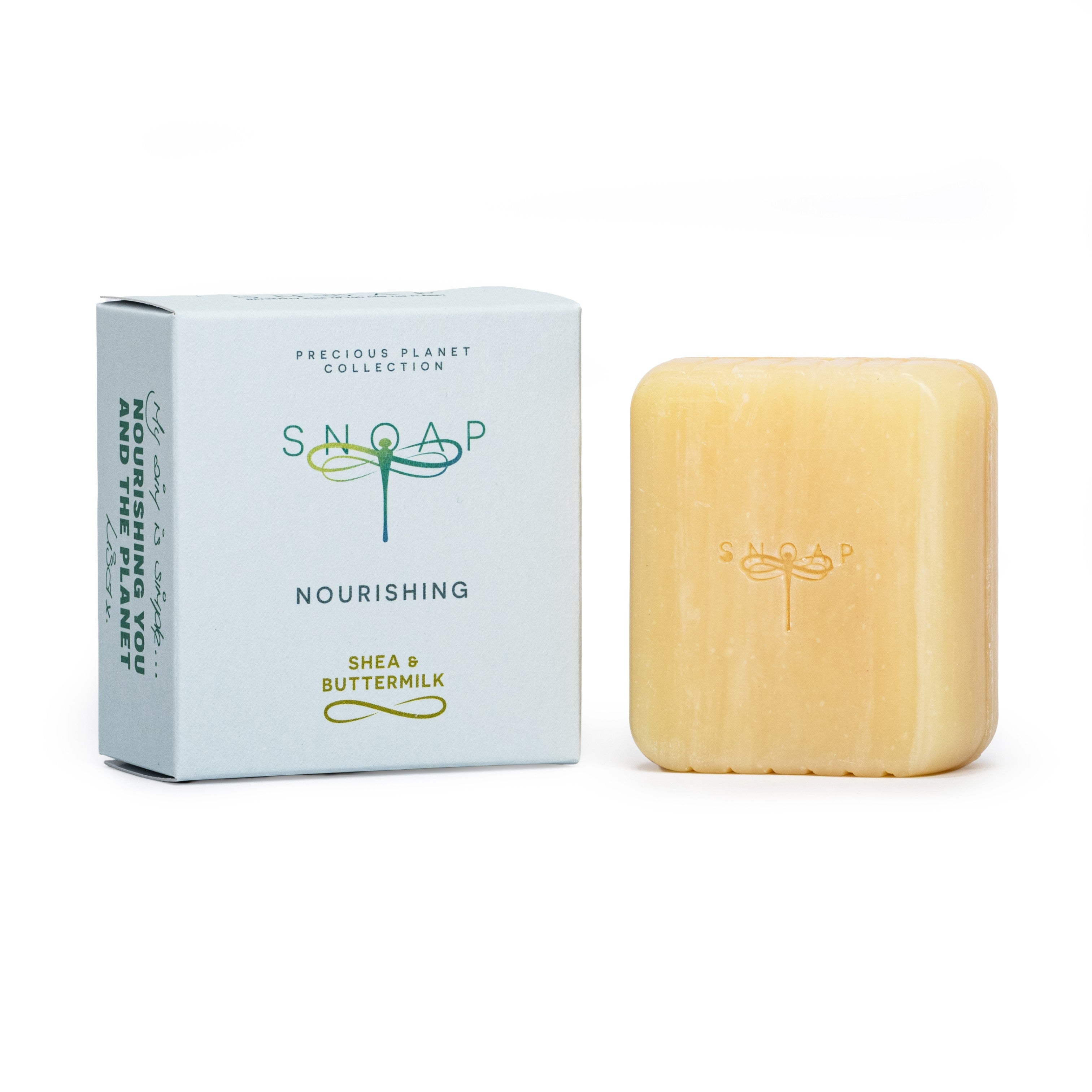
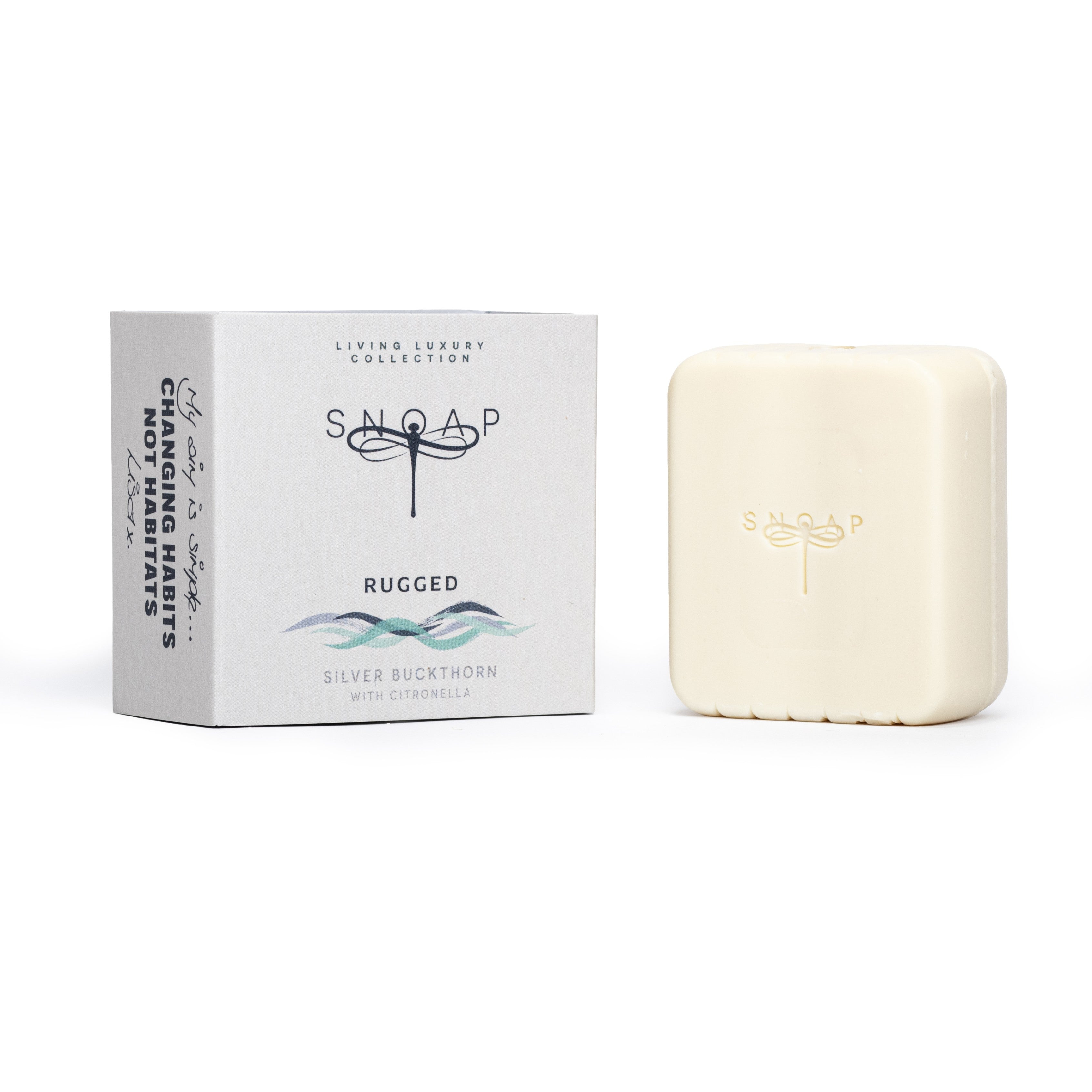
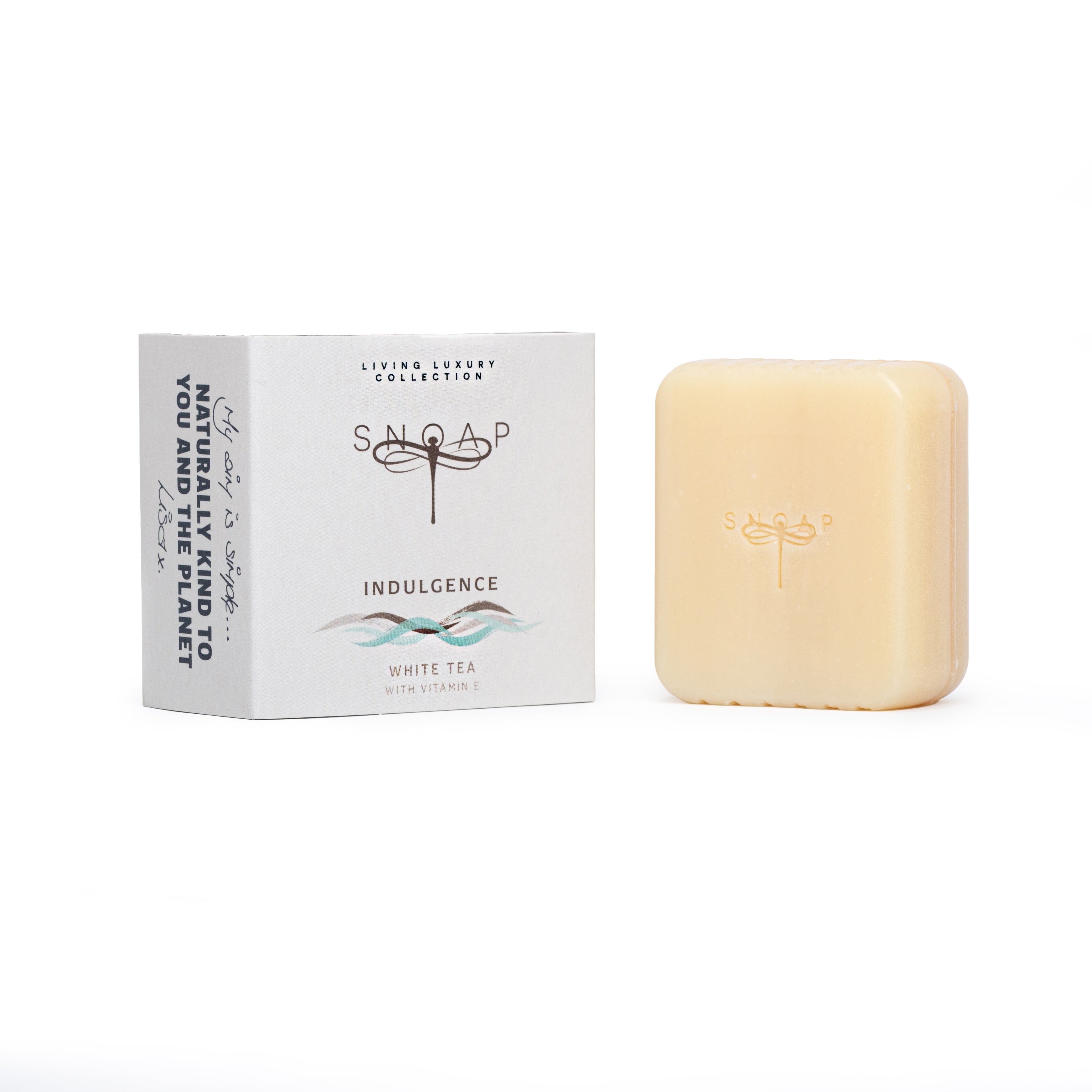
The SNOAP Refillable Soap Dispenser System [LINK: Dragons' Den Deal] is built around real soap made through saponification. Here is what that means and why it matters.
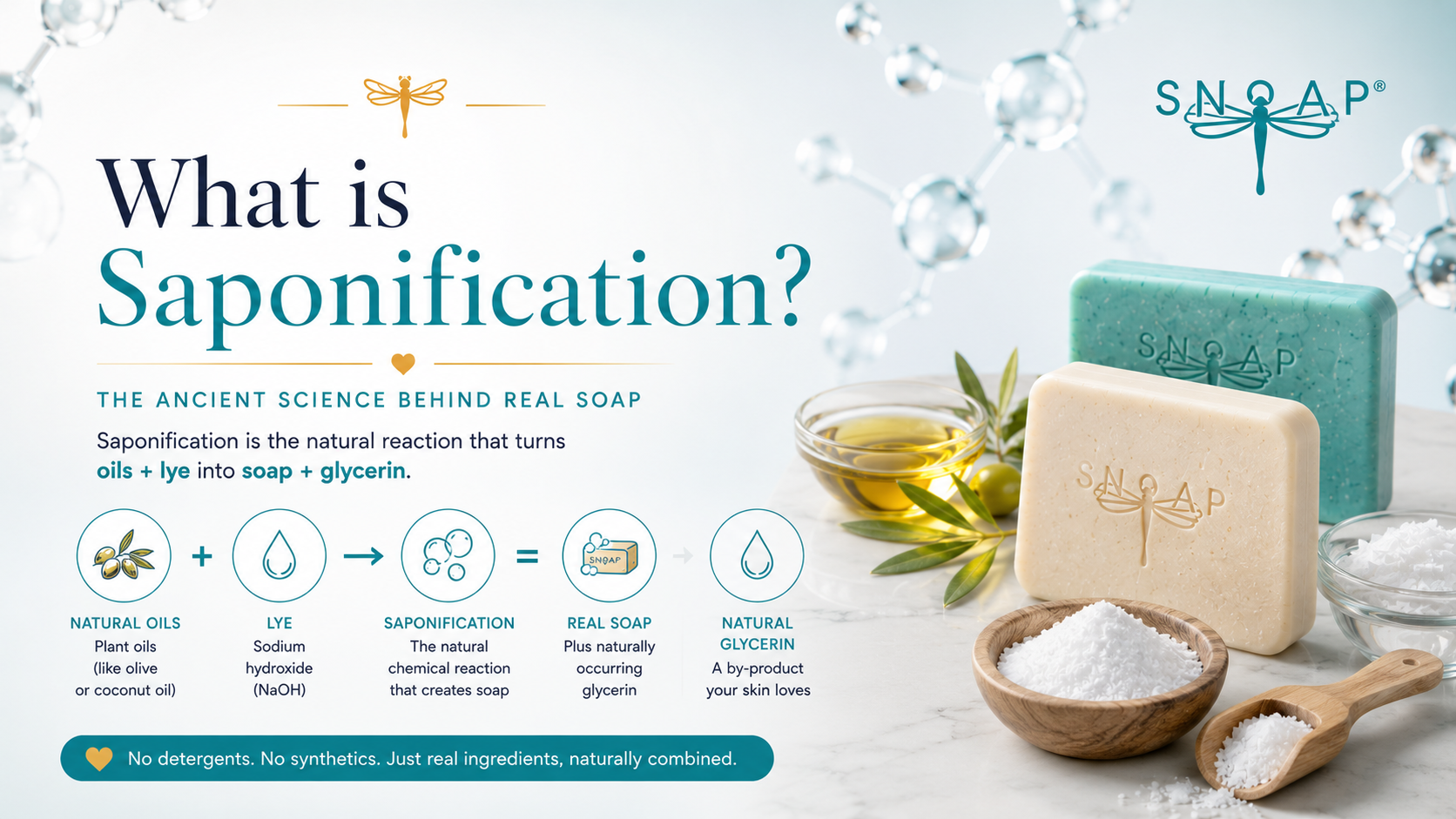
What Is Saponification?
Saponification is the chemical reaction that occurs when fats or oils are combined with an alkali — typically sodium hydroxide. The result is two things: soap, and glycerin. Both have been used for centuries to clean and care for skin.
The word comes from the Latin sapo — soap. The process has been used for thousands of years. What makes saponification special is that it creates a cleaning agent that retains naturally derived glycerin — a powerful moisturiser that draws moisture from the air into the skin and supports the skin's natural protective barrier.
What Is Refillable Washing?
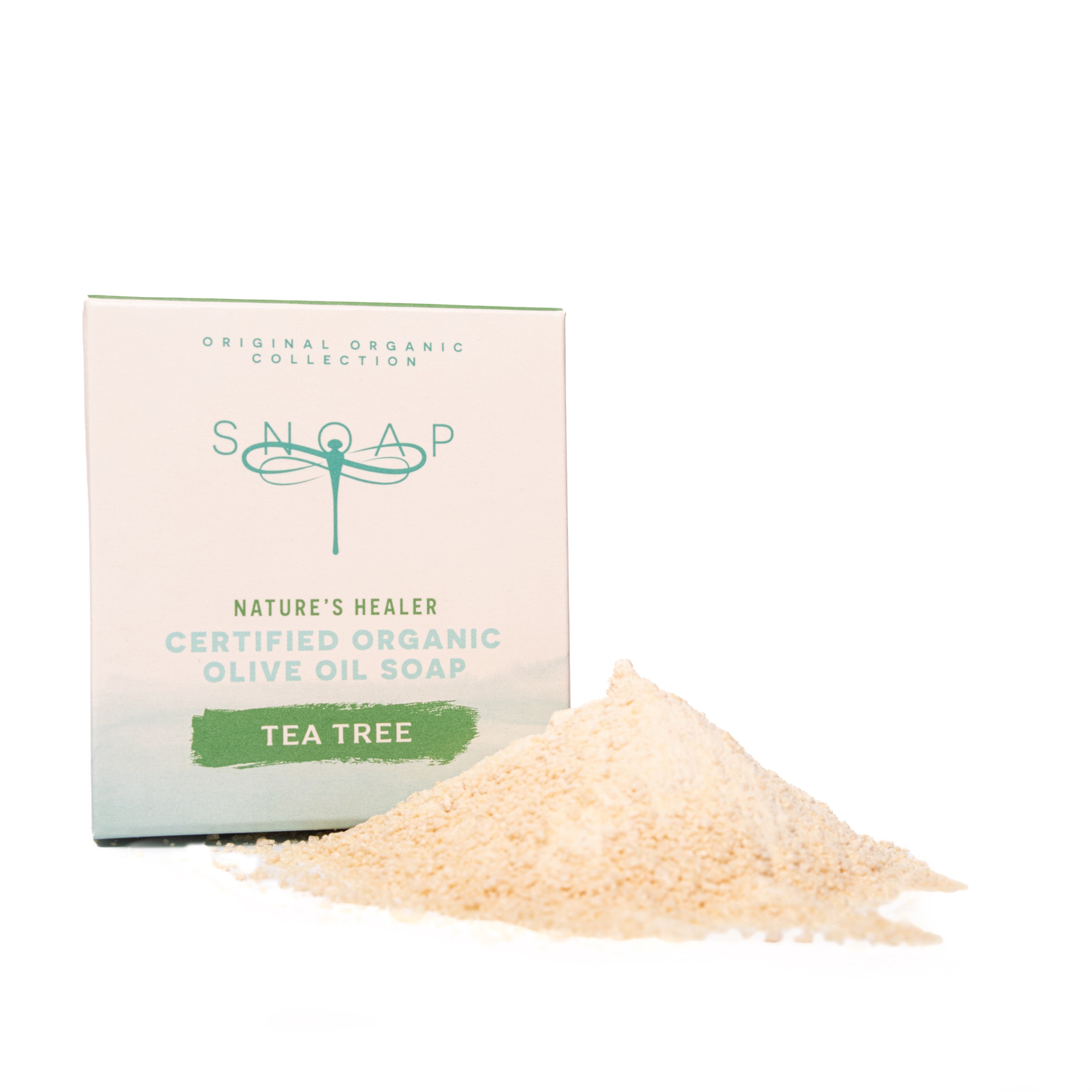
Refillable washing replaces single-use plastic bottles of liquid soap with a permanent dispenser and concentrated solid soap bars. The SNOAP system grinds solid bars into a fine powder that lathers instantly with water — all the convenience of liquid, none of the waste, none of the detergent, none of the skin-stripping.
Why Liquid Soap Is Not Actually Soap
When manufacturers moved from bar to liquid in the twentieth century, they faced a problem. True liquid soap made through saponification is unstable at scale. The solution: synthetic surfactants — the same chemical family as washing-up liquid and laundry detergent.
This is why your hand wash bottle does not say 'soap' on the ingredients list. It says sodium laureth sulphate or similar. These are detergents — very effective at removing grease, but fundamentally different from real soap in how they interact with skin.
There is also the water problem. Most liquid soap products are 60 to 90 percent water. And 60 percent of what you apply to your hands goes down the drain unactivated — before it has cleaned anything at all.
What Saponification Does That Detergent Cannot
Saponification produces two outputs: soap molecules and glycerin. Synthetic detergents produce only surfactant molecules — the glycerin is chemically stripped out and sold to the cosmetics industry separately and back to you as moisturiser.
Glycerin is a humectant. It draws moisture from the air into the skin. It supports the skin's natural barrier function, helping it retain hydration and protect against environmental irritants. When you wash with a real saponified soap, like SNOAP, you are supporting your skin's natural protective mechanisms. When you wash with detergent-based liquid soap, you are stripping that barrier with every wash.
This is why people who switch from liquid soap to SNOAP notice softer hands within days. Not weeks. Days.

The Environmental Difference
Soap made through saponification is readily biodegradable and safe for waterways. Many synthetic surfactants are not. Additionally, liquid soap products require water to be transported — adding substantially to their carbon footprint. SNOAP eliminates the water content entirely. One refill bar replaces up to 20 single-use plastic bottles and drasticallly lowers the carbon footprint by upto 90%
When Tops Day Nurseries — the 2026 King's Award winners for Sustainable Development — adopted SNOAP across all 33 of their locations, their Sustainability Manager Sandy researched every single ingredient before committing. Her conclusion: it ticks every box.
Sandy Looked at Every Ingredient
Quick Reference — Liquid Soap vs Real Soap
|
What is saponification? |
The chemical reaction between fats or oils and an alkali that produces real soap and glycerin. The process that makes soap genuinely different from synthetic detergent. |
|
Is liquid soap a detergent? |
Yes. Most liquid hand wash, body wash, and shower gel is legally classified as a detergent — containing synthetic surfactants rather than saponified soap and stripped of glycerin. |
|
Why does glycerin matter for skin? |
Glycerin is a humectant that draws moisture into the skin and supports the natural barrier. Real soap retains it. Liquid detergent soap strips it out during manufacturing. |
|
Is SNOAP made through saponification? |
Yes. All SNOAP soap bars are saponification-made — retaining naturally derived glycerin. This is what makes SNOAP fundamentally different from liquid hand wash or body wash. |
|
Why do my hands feel tight after liquid soap? |
That tightness is your skin's natural barrier being stripped. Synthetic surfactants remove not just bacteria but also the natural oils and moisture your skin needs. |
Key Takeaways
• Saponification is the process that creates real soap and retains naturally derived glycerin — fundamentally different from synthetic liquid soap detergents • Most liquid hand wash, body wash and shower gel is legally a detergent — it strips the skin's natural barrier with every use • Real saponified soap supports skin health by retaining glycerin that draws moisture into the skin • Refillable systems like SNOAP replace single-use plastic bottles while delivering a clinically better wash • Switching from liquid soap to SNOAP is a tiny behaviour change with lasting benefits for skin, wallet, and environment
About SNOAP: The UK's first refillable solid soap dispenser system. Founded by Lisa Hicks in Monmouth, Wales. As seen on BBC Dragons' Den — all 5 Dragons made offers, we chose Deborah Meaden and Peter Jones. snoap.com