Someone asked me recently why I invented SNOAP.
The answer is surprisingly simple.
I couldn't get my own family to use soap bars.
That's it.
SNOAP didn't begin in a laboratory, a design studio or a corporate innovation meeting.
It began in our family bathroom.
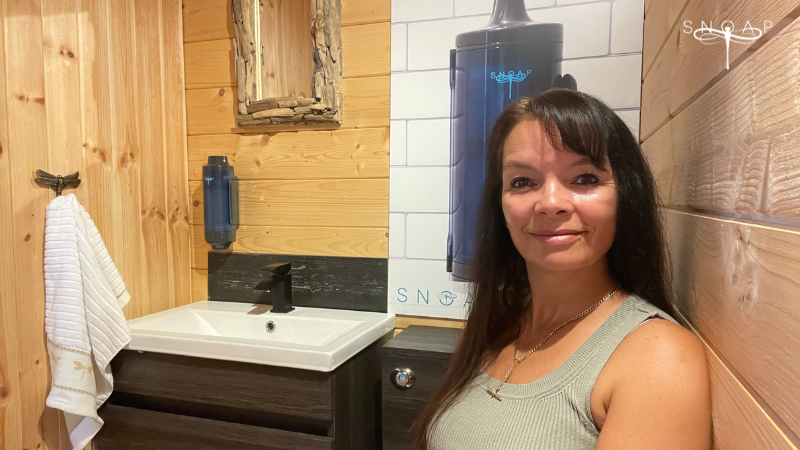
And yes, that's why I've chosen to sit on the loo for the photograph accompanying this blog.
Don't worry. The lid is down and my trousers are firmly up.
But the bathroom really is where the SNOAP story began.
I wanted to get rid of the bottles
During lockdown in 2020, like a lot of people, I became much more aware of what we were consuming and throwing away at home.
We're a family of five.
And once I started noticing the number of bottles of hand wash, shower gel and shampoo we were getting through, I couldn't stop noticing them.
Bathroom.
Shower.
Kitchen sink.
Another bottle empty. Another one bought. Another one thrown away.
So I decided we should change.
Solid soap and shampoo bars seemed like the obvious answer.
No repeated bottles of liquid wash. Much less packaging. Compact to store and transport.
Easy.
Or so I thought.
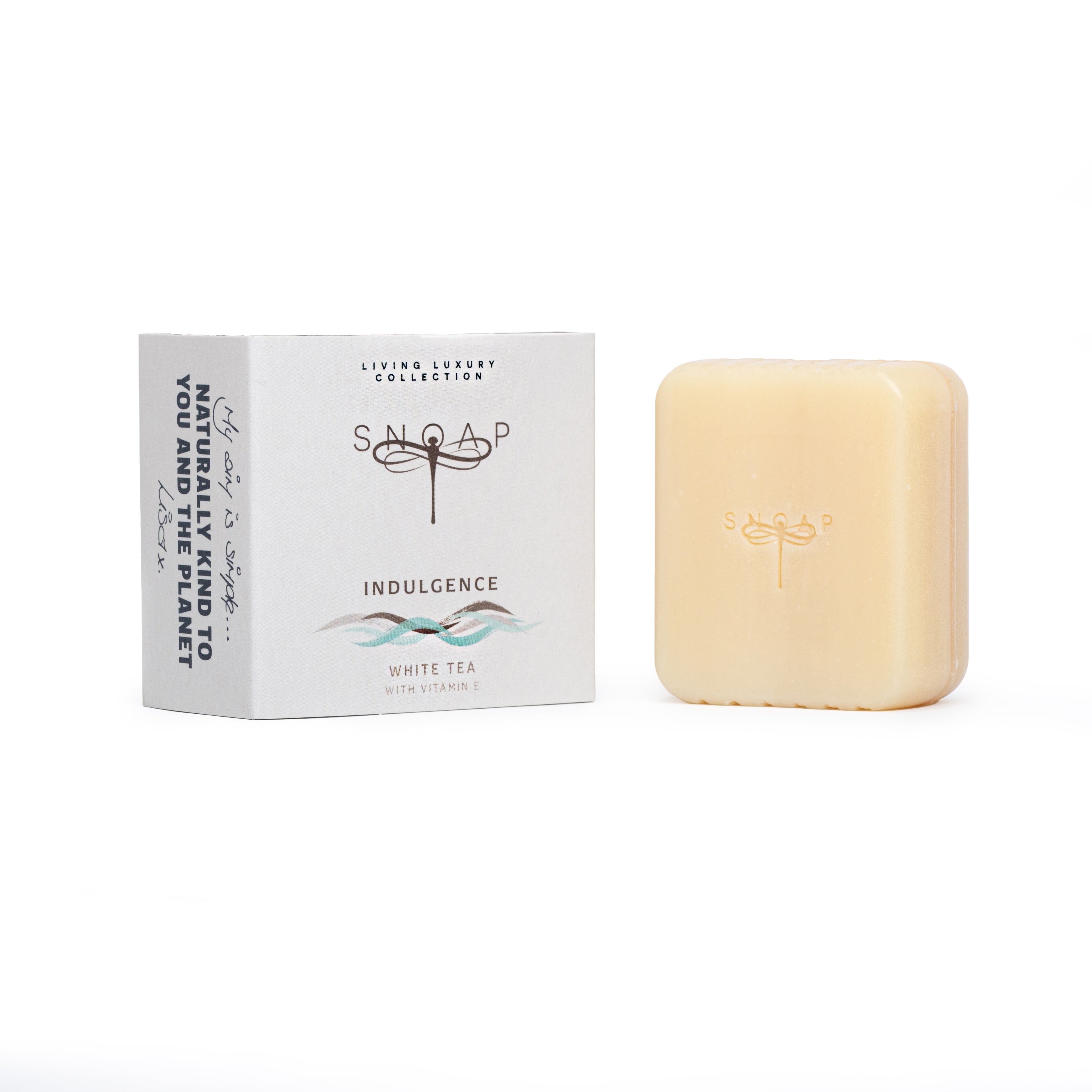
I bought bars for the family.
And they didn't want to use them.
The problem wasn't the bar
The bars themselves weren't the problem.
The problem was what my family had become accustomed to.
Convenience.
A bottle with a pump is incredibly easy to use.
Push down. Product comes out. Wash.
A traditional bar asks you to do things differently.
You pick it up. Everyone handles it. It gets wet. You have to put it somewhere. It can become soggy. It can stick to whatever it's sitting on.
And in a busy bathroom shared by five people, my family simply didn't want to make the switch.
Initially, that was frustrating.
I was trying to make what I thought was a better choice, and nobody else in the house was playing along.
But eventually I realised something.
Perhaps I was trying to solve the wrong problem.
Why should people have to choose?
I could have kept telling my family why they should use the bars.
I could have talked about single-use plastic.
I could have tried to persuade them that a little inconvenience was worth it.
But that's not generally how successful behaviour change works.
If one option is familiar, quick and convenient, and the alternative feels like a compromise, most people will keep choosing the convenient one.
So I started asking a different question:
Why should we have to choose between the benefits of a solid bar and the convenience of a dispenser?
Could we have both?
That question changed everything.
What if I changed the product instead of the people?
I stopped trying to persuade my family to change the way they washed.
Instead, I started thinking about how I could change the way a solid bar was used.
What if the soap could stay safely inside something?
What if nobody needed to handle the wet bar?
What if you could walk up to a dispenser, get exactly the amount of soap you needed and wash your hands?
And what if we could do that without turning the soap into a bottle of liquid?
That became the idea behind SNOAP.
Rather than dispensing liquid soap, the SNOAP Refillable Soap Dispenser System holds solid bars and turns them into fresh soap powder at the point of use.
Put the bars in.
Turn the top.
Fresh soap powder comes out of the bottom.
Add water.
Wash.

Solid soap. Dispenser convenience.
It sounds wonderfully simple when I describe it now.
Making it work was anything but.
Two and a half years later...
I spent the next two and a half years designing, testing, changing and refining the idea.
There were prototypes.
Lots of prototypes.
Things worked. Things didn't work. Things nearly worked and then created another problem that needed solving.
Because the challenge wasn't simply finding a way to grate a bar of soap.
It had to become something people would actually want to have in their bathrooms.
It needed to be simple.
Convenient.
Refillable.
Easy to use.
And capable of turning an ordinary everyday behaviour into something fundamentally different without making washing your hands feel like an environmental project.
Eventually, that work became the patented SNOAP Refillable Soap Dispenser System.
But something else happened during those two and a half years.
I learned much more about what we'd actually been washing ourselves with.
I discovered that most liquid wash isn't actually soap
I'd always used the words liquid soap in the same way most people do.
Then I started researching.
And I discovered that many of the products we casually call liquid soap — including many hand washes, body washes and shower gels — aren't traditional soap at all.
They're detergent-based cleansing products, typically made using synthetic surfactants.
Traditional real soap is made through saponification, when fats or oils react with an alkali. That process also produces glycerin, which remains naturally present in properly made soap.
That discovery gave me another reason to question why liquid wash had become our default.
We hadn't necessarily chosen it because it was better.
We'd chosen the system because it was convenient.
And that distinction became incredibly important to me.
SNOAP isn't about going backwards
Sometimes the conversation around reducing single-use plastic seems to suggest we need to return to how things used to be.
Give something up.
Accept a little inconvenience.
Make do.
I don't believe that's how we're going to change everyday behaviour at scale.
SNOAP isn't about going backwards to the soap dish.
It's about taking something incredibly simple and effective — a solid bar — and making it work for the way we live now.
That's why the dispenser matters.
We're not asking people to choose between the bar and the bottle.
We've created another option.

The better choice has to be easy to make
That original argument with my own bathroom has shaped much more than the product.
It's shaped how I think about sustainability and behaviour change.
We can tell people to make better choices.
We can educate them.
We can show them statistics.
We can tell them what they should do.
But if the alternative we're offering is less convenient, we are creating a barrier ourselves.
I've come to believe that one of the most powerful things product innovation can do is remove that barrier.
Don't make the better choice harder.
Make it easy.
Make it enjoyable.
Make it something people actually want to use.
And ideally, make it work so well that eventually it doesn't feel like the alternative at all.
It simply becomes the way you wash.
From our bathroom to thousands of others
When I first started trying to solve this problem, I certainly wasn't thinking about where it might lead.
I wanted my family to stop getting through so many bottles.
That was the problem.
Today, SNOAP is being used by thousands of households and by businesses, schools, nurseries and workplaces.
A dispenser can hold two SNOAP bars, providing around 2,000 hand washes before those two bars need replacing.
Instead of repeatedly replacing bottles of liquid wash, the dispenser stays and the bars are the refills.
The idea has grown enormously.
But the principle hasn't changed at all.
So, why did I invent SNOAP?
Because I wanted my family to use bars.
And they wouldn't.
That resistance could have been the end of the story.
Instead, it became the reason SNOAP exists.
Because sometimes the answer isn't to keep telling people to change their behaviour.
Sometimes you need to look at the product they're being asked to use and ask:
Could we make this better?
That's what I did.
I wasn't trying to invent a soap company.
I was trying to solve a problem in our family bathroom.
And I had absolutely no idea where that problem was going to take us.
Ready to change the way you wash?
The SNOAP Refillable Soap Dispenser System combines real solid soap with the convenience of a dispenser — giving you a different way to wash without repeatedly buying bottles of liquid wash.
Better skin. Less waste. Lower costs.
Refill Not Landfill.
FAQ section for Google & AI search
Why was SNOAP invented?
SNOAP was invented by Lisa Hicks after she wanted her family of five to move away from bottles of liquid wash but found that they didn't like the inconvenience of traditional soap and shampoo bars. She developed a dispenser that turns solid bars into fresh powder at the point of use.
How does the SNOAP Refillable Soap Dispenser System work?
Solid SNOAP bars are placed inside the dispenser. Turning the top grates a small amount into powder, which dispenses from the bottom. Water is then added to create a lather for washing.
Does SNOAP use liquid soap?
No. The SNOAP Refillable Soap Dispenser System is designed to dispense solid soap and shampoo bars as powder rather than storing liquid wash.
How many hand washes does a SNOAP dispenser provide?
A fully loaded SNOAP dispenser holds two bars and provides approximately 2,000 hand washes, depending on the amount dispensed per use.
What problem does SNOAP solve?
SNOAP was designed to combine the convenience people associate with a dispenser with the benefits of solid soap, reducing reliance on repeatedly purchased bottles of liquid wash and the associated single-use plastic. And to give a clinically better, nourishing wash that doesn't strip your skin or hair.